
🚤 Stoke Bruerne and the Grand Union Canal
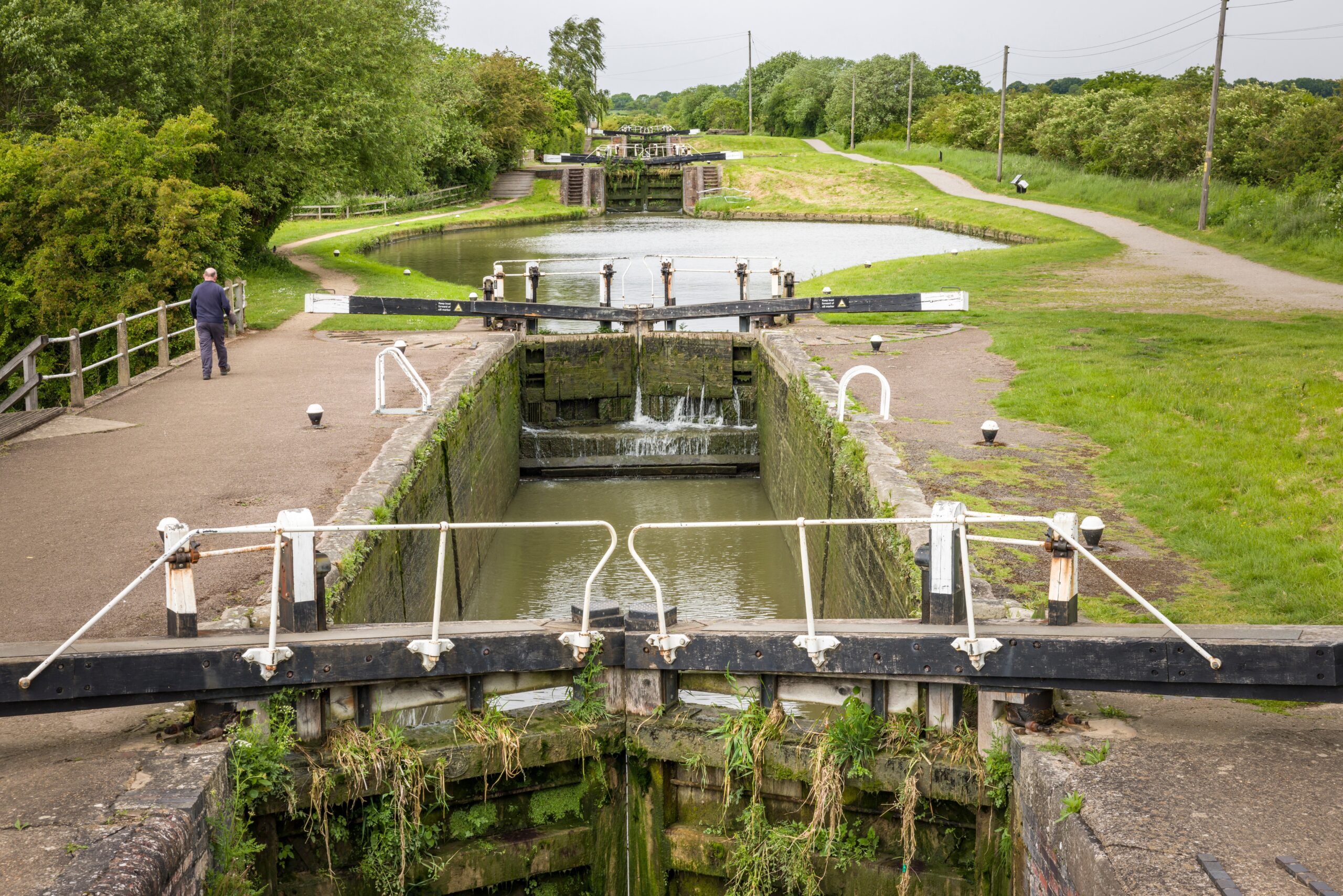
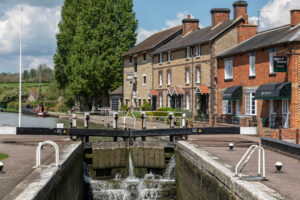
Stoke Bruerne is one of the most celebrated canal villages in England, located in Northamptonshire on the Grand Union Canal. The village is best known for the Stoke Bruerne Lock Flight, a dramatic run of seven broad locks that raise the canal through the centre of the town. Together, the locks, canal, and surrounding village form one of the most complete and well-preserved canal heritage sites in the country.
📜 Building the canal
The canal through Stoke Bruerne was completed in 1797 as part of the Grand Junction Canal, which was constructed to create a reliable inland water route between London and the Midlands. At the time, road transport was slow and expensive, and the canal offered a far more efficient way to move heavy goods.
The lock flight was engineered to overcome a steep change in elevation in a relatively short distance. Its close-spaced locks reflect the practical engineering solutions of the late 18th century, prioritising efficiency and reliability over grandeur.
⚙️ Working canal years
During the canal’s commercial peak in the 19th and early 20th centuries, Stoke Bruerne was a busy and noisy place. Narrowboats passed through the locks carrying coal, iron, grain, timber, building materials, and foodstuffs between London, the Midlands, and beyond.
The village developed directly around this trade. Boatmen’s cottages, wharves, stables, and canal-side inns all grew up to serve the constant flow of traffic. Stoke Bruerne became a natural stopping point for crews working long journeys, and the canal shaped daily life in the village for generations.
🏛️ Decline and preservation
Like many canals, traffic declined rapidly after the rise of road and rail transport in the early 20th century. By the mid-1900s, commercial carrying had largely ceased, and parts of the canal network faced closure.
Stoke Bruerne, however, became an early focus for canal preservation. The survival of its lock flight, historic buildings, and canal infrastructure made it an ideal place to showcase the importance of Britain’s waterways. This led to the creation of the Canal Museum, which helped cement the village’s role as a centre for canal heritage.
⚓ The canal today
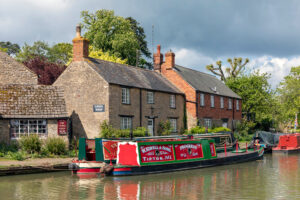
Today, the Grand Union Canal at Stoke Bruerne is a busy leisure waterway. Narrowboats, cruisers, and hire boats work the lock flight throughout the boating season, making it a popular place to watch canal activity. The locks are still operated manually, preserving traditional canal practices.
The canal is also well used by walkers and cyclists, with towpaths providing scenic routes through the countryside. Stoke Bruerne remains an important stopping point on the Grand Union, particularly for boats travelling between London and the Midlands.
👀 Things to see and do
-
Stoke Bruerne Canal Museum – offering exhibitions on canal history, engineering, and boat life
-
The lock flight – a focal point of activity, especially in summer
-
Canal-side pubs and cafés – many located in historic buildings linked to the canal’s past
-
Towpath walks – peaceful routes north towards Blisworth Tunnel or south through open countryside
-
Blisworth Tunnel – just north of the village, one of the longest canal tunnels in the country
📌 Significance
Stoke Bruerne stands as a living example of how canals shaped communities. From its origins as a vital transport route for industrial Britain to its modern role as a leisure and heritage destination, the canal remains at the heart of the village. The lock flight, museum, and surrounding landscape together offer a clear link between Britain’s industrial past and the continued enjoyment of its inland waterways.
When you click on links to merchants from the site Website and make a purchase it may lead to this website earning a commission. This does not effect the price you pay. Affiliate programs and affiliations include but are not limited to The Ebay Partner Network, Amazon, and Awin programs.