
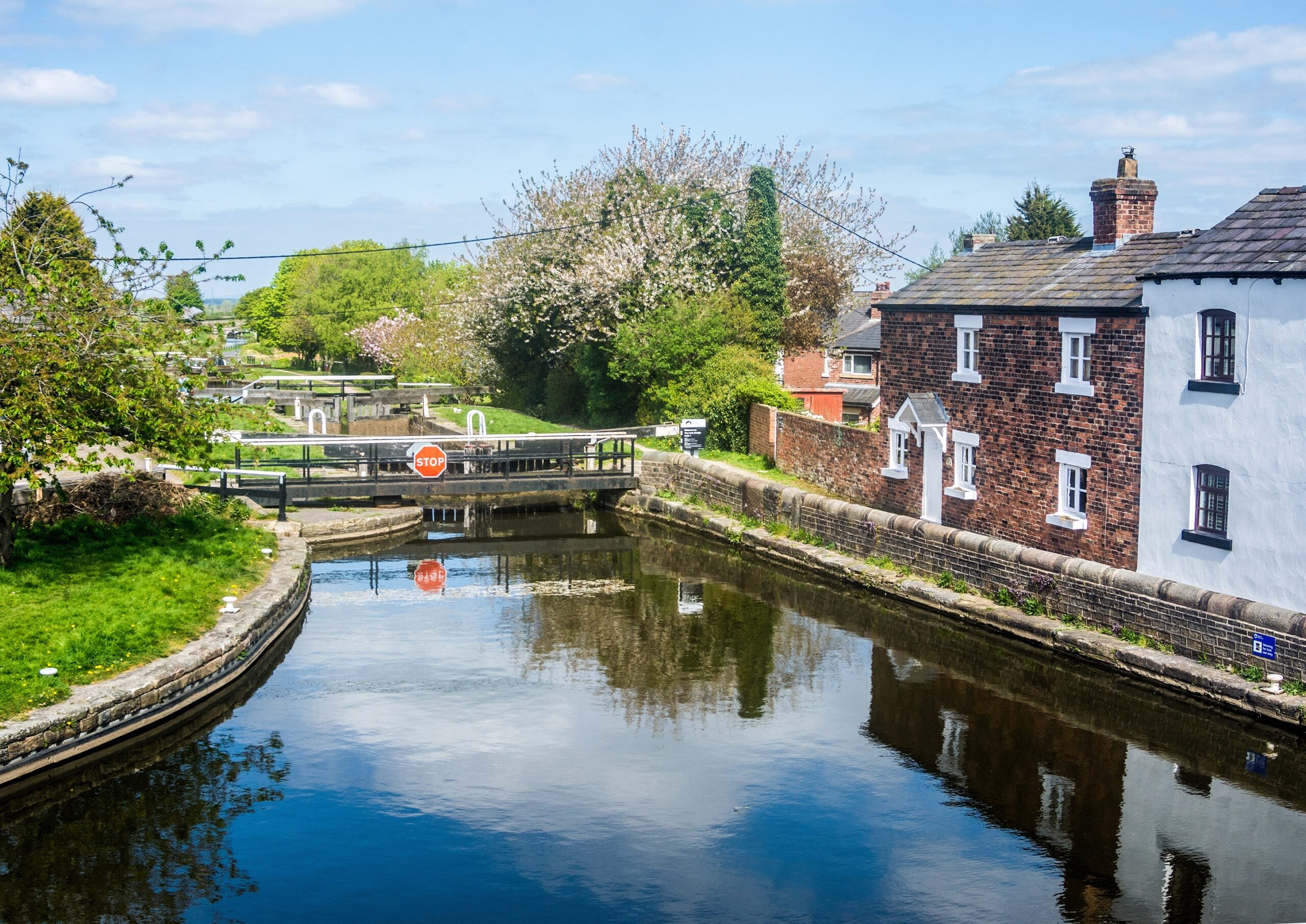
The Rufford Branch is a short but historically significant section of the Leeds & Liverpool Canal, located in West Lancashire. Running for just under 7 miles between Burscough and Tarleton, the branch links the main canal to the River Douglas, providing onward access to the River Ribble and, beyond that, tidal waters.
📜 Early history and purpose
The Rufford Branch opened in 1781, making it one of the earliest sections of the Leeds & Liverpool Canal to be completed. At the time, the full canal route across the Pennines was still decades away from completion. This early opening reflects the commercial importance of the route, particularly for moving goods between inland Lancashire and the port of Liverpool.
The branch was built to connect with the existing Douglas Navigation, which had already been improved to allow boats to travel between the Ribble estuary and the inland waterways. By linking the canal to the river, the Rufford Branch provided a valuable trade route for coal, agricultural produce, and general cargo, strengthening Liverpool’s access to inland markets.
⚙️ Engineering and layout
The branch includes eight narrow locks, all built to traditional dimensions. These locks manage a gentle change in level across the flat Lancashire landscape and are characteristic of early canal construction, prioritising practicality and economy rather than dramatic flights or staircases.
The canal follows a largely straight course, reflecting both the flat terrain and the agricultural nature of the area it serves. Unlike later sections of the Leeds & Liverpool Canal, which had to negotiate difficult upland geography, the Rufford Branch was comparatively straightforward to build.
🌾 The Rufford Branch today
Today, the Rufford Branch is known for its quiet, rural character. Much of the route passes through open farmland, with wide skies and long, peaceful stretches between settlements. While it sees less day-to-day traffic than the main line, it remains an important route for leisure boats travelling to and from the Ribble Link and the tidal rivers beyond Tarleton.
The junction at Burscough connects the branch back to the main Leeds & Liverpool Canal, while the lower end near Tarleton Lock marks the transition from canal to river navigation. From here, careful timing and tidal planning are required for boats continuing onto the River Douglas and the Ribble.
📌 Significance
Although short in length, the Rufford Branch plays a key role in the wider canal network. Its early opening highlights the commercial pressures that shaped the development of the Leeds & Liverpool Canal, and its continued use today underlines its lasting importance as a link between inland waterways and tidal routes.
Quiet, historic, and functional, the Rufford Branch remains a reminder of the practical origins of Britain’s canal system and the role these early waterways played in regional trade and transport.
When you click on links to merchants from the site Website and make a purchase it may lead to this website earning a commission. This does not effect the price you pay. Affiliate programs and affiliations include but are not limited to The Ebay Partner Network, Amazon, and Awin programs.