
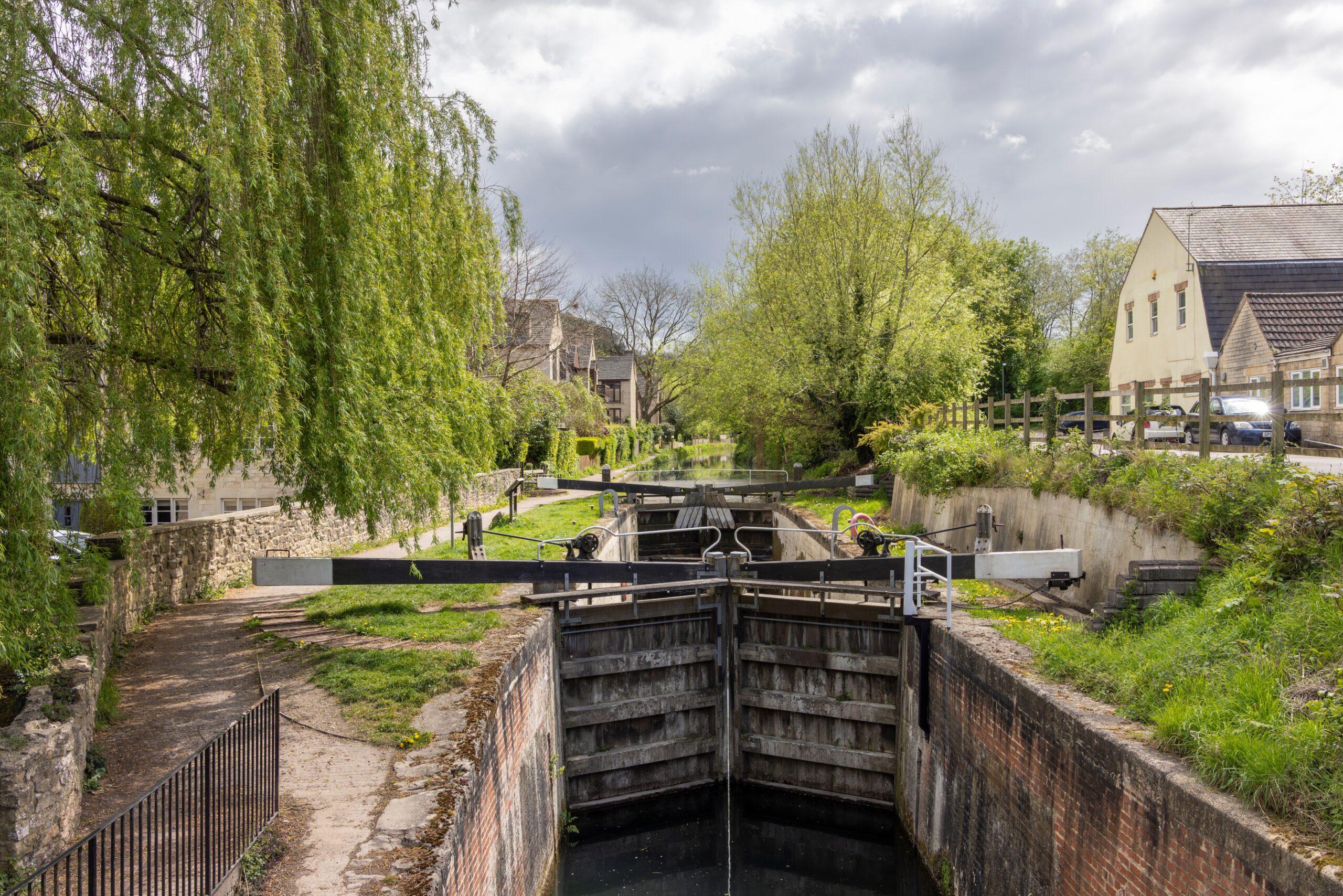
Bowbridge Lock Restoration: A Key Milestone on the Stroudwater Navigation
Set just outside the town of Stroud in Gloucestershire, Bowbridge Lock is one of the most historically significant structures on the Stroudwater Navigation. By April 2025, following extensive restoration work, the lock once again stands as a working example of early canal engineering and an important step forward in the long-running effort to fully restore navigation between the Severn Estuary and the River Thames.
Historic Importance of Bowbridge Lock
The Stroudwater Navigation opened in 1779, linking Stroud to the River Severn at Framilode. Built to serve the thriving woollen industry of the Stroud valleys, the canal enabled raw materials and finished cloth to be transported far more efficiently than by the region’s narrow, steep roads.
Bowbridge Lock lies near the eastern end of the navigation and was one of the canal’s key control points. It helped manage changes in level as boats descended towards the Severn, forming part of a carefully engineered system that allowed broad barges to move through what is otherwise a challenging landscape.
For many decades the canal was central to local trade, but like much of Britain’s inland waterway network, it fell into decline during the late 19th and early 20th centuries as railways and roads took over. Commercial traffic ceased, the canal was abandoned, and many structures — including Bowbridge Lock — gradually deteriorated or were filled in.
Decline and Closure
By the mid-20th century, Bowbridge Lock was no longer operational. Sections of the canal were blocked, water levels were uncontrolled, and original masonry suffered from neglect and weathering. In places, the canal route became fragmented, with roads, housing and utilities crossing or encroaching upon it.
Despite this, the underlying structure of Bowbridge Lock survived remarkably well, making it a strong candidate for restoration once efforts began to revive the Stroudwater Navigation.
The Restoration Project
The restoration of Bowbridge Lock forms part of the wider Cotswold Canals Restoration Project, led by the Cotswold Canals Trust in partnership with local authorities, funding bodies and volunteers. The long-term aim is to reopen a continuous navigable route from the River Severn to the River Thames, reconnecting the Stroudwater Navigation with the Thames & Severn Canal.
Work at Bowbridge Lock involved carefully uncovering and repairing the original lock chamber, restoring stonework, and installing new lock gates built to traditional designs while meeting modern safety and engineering standards. Considerable attention was paid to water management, ensuring that the lock could once again hold and control water levels effectively without compromising nearby land or infrastructure.
By April 2025, the lock had been fully restored, refilled, and brought back into water, marking a significant milestone for the eastern end of the navigation.
Bowbridge Lock in 2025
Following restoration, Bowbridge Lock now presents a clear picture of how the Stroudwater Navigation would have looked during its working life. The lock chamber is once again defined, the gates operational, and water flowing through a structure that had been dry or derelict for generations.
While full through-navigation of the canal remains a longer-term goal, the reopening of Bowbridge Lock demonstrates tangible progress. It provides an operational section of canal that can be used for demonstration, heritage boating, and education, while also enhancing the surrounding landscape.
The restored lock has also become a focal point for walkers and cyclists using the canal towpath, offering a visible reminder of the engineering skill that underpinned Stroud’s industrial success.
The Canal’s Role Today
Although the Stroudwater Navigation is no longer a commercial freight route, its modern role is no less valuable. Restored sections now serve as:
recreational waterways for leisure craft
wildlife corridors supporting biodiversity
green spaces for walking and cycling
heritage assets preserving industrial history
Bowbridge Lock’s restoration contributes directly to this renewed purpose, combining conservation with community benefit.
Looking Ahead
The successful restoration of Bowbridge Lock strengthens momentum for the wider canal project. Each reopened structure brings the vision of a continuous navigable route closer, reconnecting Gloucestershire with one of Britain’s most ambitious canal engineering achievements.
In April 2025, Bowbridge Lock stands not just as a repaired piece of infrastructure, but as a symbol of what sustained restoration efforts can achieve — breathing new life into historic waterways and ensuring they remain part of the landscape for generations to come.
When you click on links to merchants from the site Website and make a purchase it may lead to this website earning a commission. This does not effect the price you pay. Affiliate programs and affiliations include but are not limited to The Ebay Partner Network, Amazon, and Awin programs.