
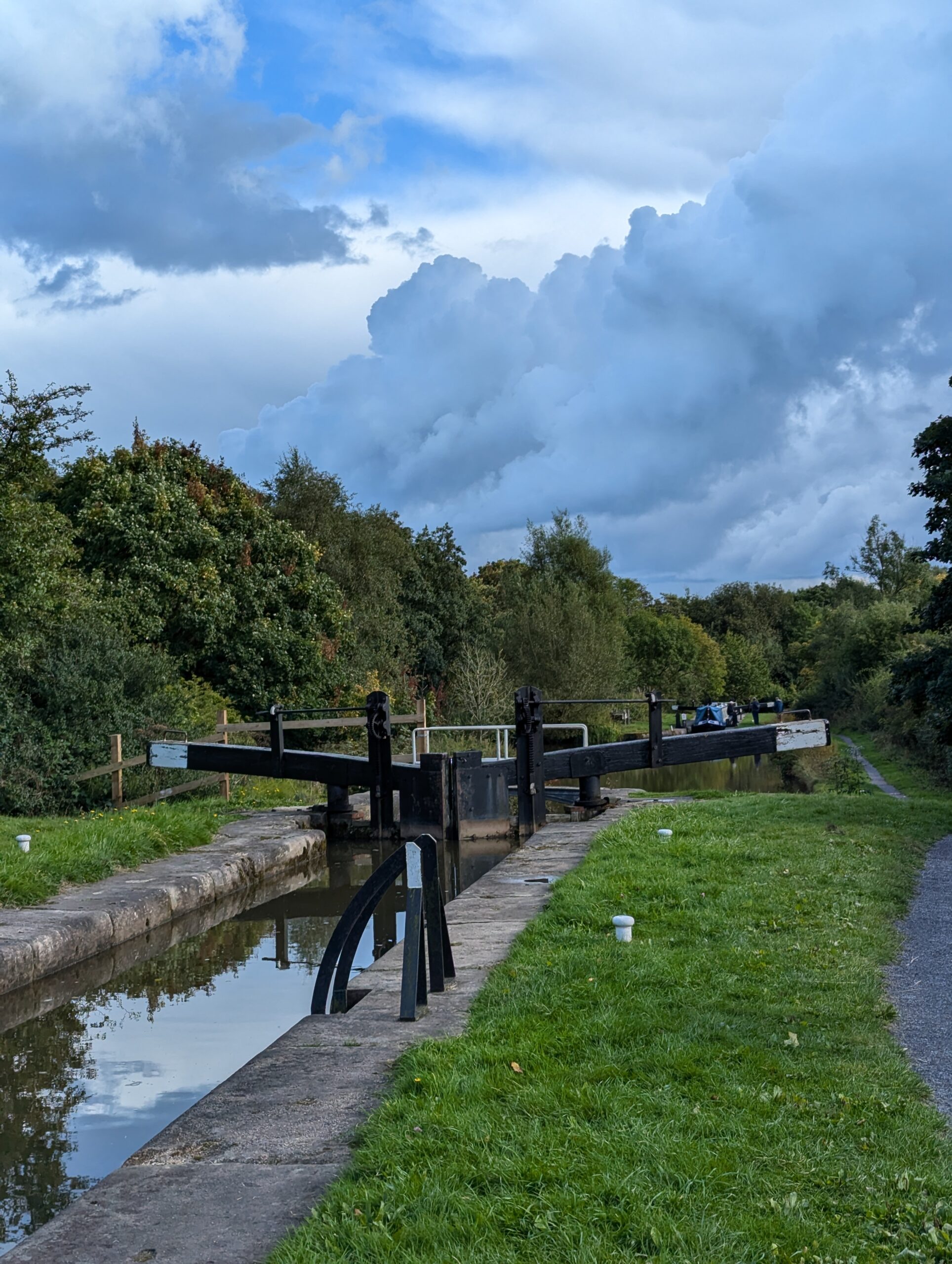
Bosley Locks – History, Engineering, and Significance
Bosley Locks, a striking flight of twelve narrow locks, forms one of the most impressive engineering features on the Macclesfield Canal in Cheshire. Rising through a total of 118 feet (36 metres), the flight lifts boats from the Cheshire Plain up towards the edge of the Peak District. Today it’s one of the most photographed sections of the canal, known for its rural setting, distinctive stonework, and peaceful views across Bosley Cloud.
A Brief History
Bosley Locks were constructed as part of the Macclesfield Canal, which opened in 1831. The canal was one of the last narrow canals to be built during the canal era, designed with efficiency and cost-effectiveness in mind. Thomas Telford influenced the design standards, resulting in a canal known for its clean lines, elegant bridges, and high-quality stone construction.
The flight itself was engineered to tackle a significant rise in terrain within a short distance. Instead of spreading the elevation change over miles, the designers concentrated it into a compact staircase of twelve individual locks. Each lock was built with locally quarried stone, giving the flight its iconic solid, angular appearance.
Layout and Design
Bosley is not a true “staircase” (where locks share gates). Instead, it is a flight of twelve separate single narrow locks, numbered 1 to 12, spaced at short but distinct intervals. This allows water to be managed more easily and gives boaters passing places between each chamber. The locks are accompanied by side ponds and feed systems designed to conserve water—an important consideration even in the 1830s.
The flight begins near the Bosley Reservoir, a major water source for the canal. Built specifically to supply the Macclesfield Canal, the reservoir holds around 300 million gallons and remains one of the key features supporting the waterway’s operations today.
Operation and Use
Throughout the 19th century, Bosley Locks saw heavy commercial traffic carrying coal, silk, cotton, and stone between mills and industrial towns of the Northwest and Midlands. The Macclesfield Canal prospered longer than many other canals thanks to efficient construction and the booming textile trade of the region.
As commercial use faded in the early 20th century, pleasure boating and local recreation took over. Today, boaters regard Bosley as one of the most enjoyable flights to work through—peaceful, well-maintained, and set in open countryside with far-reaching views.
Management and Preservation
The flight is now cared for by the Canal & River Trust, which carries out ongoing stonework repairs, gate replacements, and vegetation management to preserve its historic character. Despite being nearly 200 years old, much of the stone structure remains original.
Lock 6, in particular, is notable for having one of the oldest surviving lock gates in the early 20th century before later replacement—highlighting the high craftsmanship of the original builders.
When you click on links to merchants from the site Website and make a purchase it may lead to this website earning a commission. This does not effect the price you pay. Affiliate programs and affiliations include but are not limited to The Ebay Partner Network, Amazon, and Awin programs.