
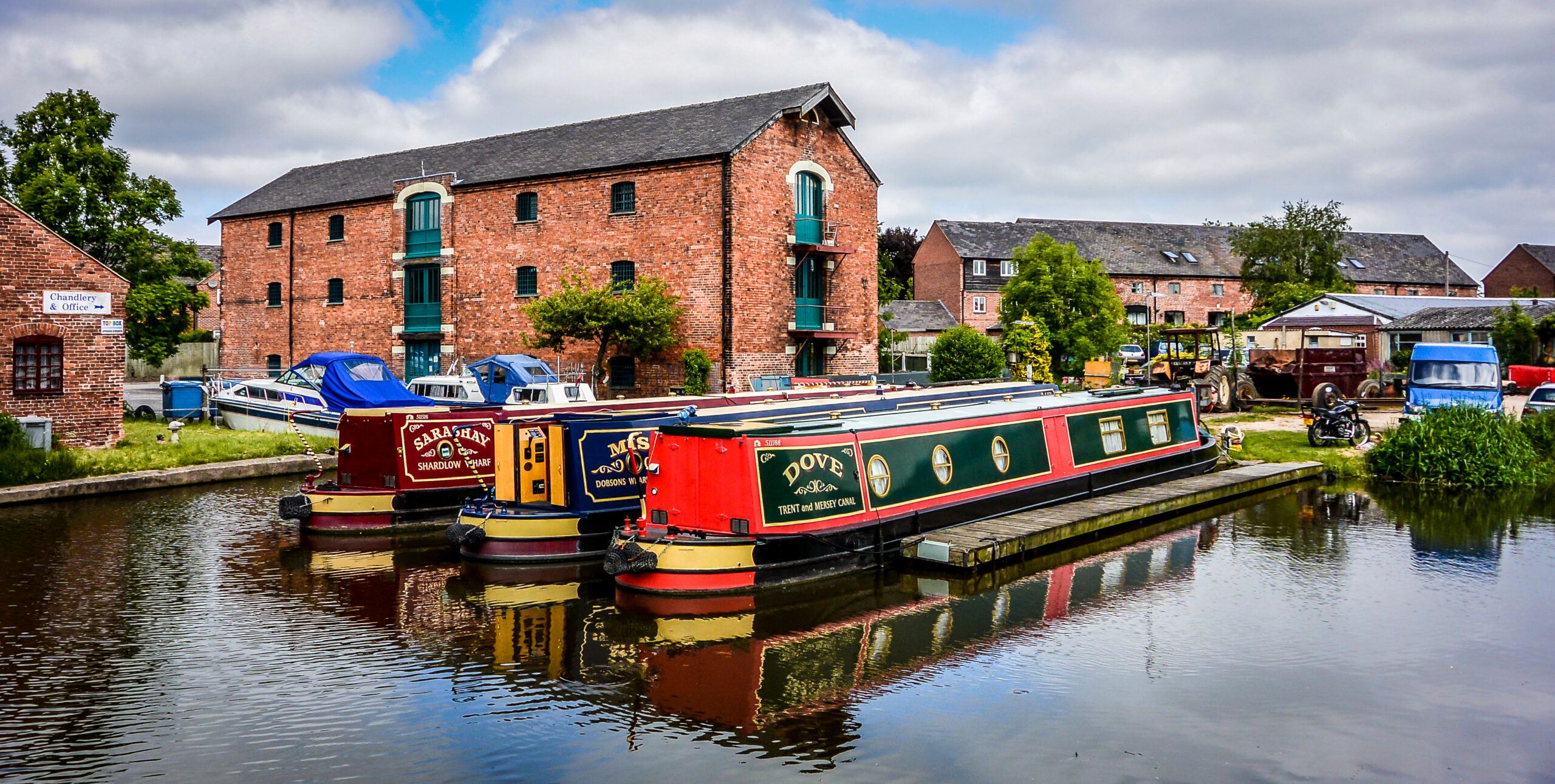
Shardlow Wharf – “The Grand Inland Port”
At the very start of the Trent & Mersey Canal, the village of Shardlow developed into one of the most important inland ports in England. Although modest in size, its strategic position near the River Trent allowed it to punch far above its weight, earning the nickname “The Grand Inland Port.”
A Strategic Canal Junction
When the Trent & Mersey Canal opened in the late 18th century, it created a vital link between the industrial Midlands and the ports of the east coast. Shardlow sat perfectly placed where canal traffic met river navigation, allowing goods to be transferred efficiently between narrowboats, river barges, and horse-drawn wagons.
This connection made Shardlow a natural distribution hub, long before railways or motor transport reshaped trade routes.
A Hive of Commercial Activity
By the late 1700s and throughout the 19th century, Shardlow Wharf was a busy and noisy place. Cargoes arriving by canal were unloaded into warehouses, sorted, and dispatched onward by river or road.
Among the goods passing through were:
-
Coal for homes and industry
-
Pottery from the Staffordshire Potteries
-
Timber, grain, and building materials
-
Foodstuffs and general groceries
To support this trade, dozens of warehouses, stables, workshops, and yards sprang up along the waterfront. Many of these buildings were constructed quickly to meet demand, yet their solid brick design has allowed them to survive into the modern day.
Warehouses That Still Tell the Story
One of Shardlow’s most remarkable features is how much of its historic fabric remains intact. The village contains an unusually high number of listed buildings, many of them former canal warehouses.
Although their uses have changed — now serving as homes, pubs, and businesses — their scale and layout still reflect their original purpose. Large loading doors, hoists, and waterside access points provide clear clues to how goods once flowed through the port.
Decline of Trade, Survival of Character
As railways expanded in the 19th century, and later with the rise of road transport, Shardlow’s role as a commercial hub gradually declined. By the early 20th century, the days of large-scale canal trade through the wharf were largely over.
Unlike many industrial sites, however, Shardlow was never completely erased or redeveloped. Instead, it settled into a quieter existence, preserving its layout and buildings almost by accident.
Shardlow Today
Today, Shardlow Wharf stands as a living record of canal history. Boats still pass through on the Trent & Mersey Canal, using the same waterway that once carried thousands of tons of cargo each year.
For those interested in inland waterways, it offers a rare opportunity to see how a major canal port once functioned — not as a museum exhibit, but as a place that has gently adapted while retaining its original character.
A Lasting Legacy
Shardlow Wharf is a reminder that the canal network was once a complex, highly organised transport system, with hubs that rivalled coastal ports in importance. Its survival makes it one of the most significant historic canal sites in the country.
Quiet today, but rich in atmosphere, Shardlow continues to reflect the ingenuity and ambition that shaped Britain’s inland waterways.
When you click on links to merchants from the site Website and make a purchase it may lead to this website earning a commission. This does not effect the price you pay. Affiliate programs and affiliations include but are not limited to The Ebay Partner Network, Amazon, and Awin programs.